
EU import requirements for wood packaging material – explained
- Labelling
- Packaging
- Wood packaging
Summary
Wood packaging material (WPM), for example pallets and crates, is a recognised pathway for the introduction of quarantine pests into the European Union (EU). For most non-EU imports, WPM must comply with the requirements of the International Standard for Phytosanitary Measures ISPM 15: “Regulation of wood packaging material in international trade”. They must be treated, debarked, and bear the official ISPM 15 mark. At EU borders, interception of non-compliant WPM can result in detention and increased costs and delays. The WPM may be destroyed or re-exported, and the consignment may be refused entry, depending on the risk.
EU import requirements for wood packaging material used in agri-food shipments
European Commission – Requirements for wood packaging & dunnage
Update
Wood packaging material (WPM), for example pallets and crates, is a recognised pathway for the introduction of quarantine pests into the European Union (EU). For most non-EU imports, WPM must comply with the requirements of the International Standard for Phytosanitary Measures ISPM 15: “Regulation of wood packaging material in international trade”. They must be treated, debarked, and bear the official ISPM 15 mark. At EU borders, interception of non-compliant WPM can result in detention and increased costs and delays. The WPM may be destroyed or re-exported, and the consignment may be refused entry, depending on the risk.
Background
EU Regulations concerning WPM follow ISPM 15
Wood, whether from living or dead trees, can harbour pests (insects, nematodes, fungi, or other organisms). Where WPM is produced from raw wood that has not undergone sufficient processing to eliminate or kill pests, it is a significant pathway for the introduction and spread of quarantine pests in international trade. Dunnage (wood used to brace or secure a load), in particular, is recognised to be higher-risk WPM because it is often of low processing quality and is sourced opportunistically.
WPM is also commonly reused, repaired, or remanufactured, which makes the origin of individual components difficult to trace and complicates any assessment of their phytosanitary status. In such circumstances, the usual approach of conducting a pest risk analysis for each origin and pathway to determine appropriate measures is often not feasible.
To reduce the introduction and spread of quarantine pests, ISPM 15 sets out harmonised, internationally accepted measures that can be applied to WPM, including treatment and marking requirements.
What counts as wood packaging material?
WPM includes pallets, crates, boxes, reels, cable drums, pallet collars, and dunnage. WPM rules generally apply regardless of the commodity being shipped, so the rules also apply to agri-food products.
Common exemptions exist, but verifying the requirements applicable to specific shipments is recommended. Exemptions include WPM made from processed wood products manufactured using glue, heat, and pressure, such as plywood, oriented strand board (OSB), or veneer; and WPM made of wood 6 mm thick or less.
Description and purpose of the ISPM 15 mark
This mark is the internationally recognised identifier that indicates WPM has been subjected to approved phytosanitary measures in accordance with ISPM 15. Its purpose is to provide a simple, standardised, and globally understood traceability signal that allows inspectors and supply chain operators to verify compliance rapidly, without the need for a separate phytosanitary certificate for packaging.
The ISPM 15 mark is composed of the ISPM 15 symbol together with codes that identify the country where the mark was applied, the authorised treatment provider, manufacturer, repairer, or remanufacturer, and the treatment that was applied. It is made up of the following required components:
Figure 1 shows common layouts of the ISPM 15 mark, showing the elements required when codes are presented on one, two, or three lines.
What are the EU import requirements for WPM?
The EU Plant Health Law identifies WPM as a known pathway for the introduction and spread of pests (Regulation 2016/2031, Art. 43), and provides for risk-based official controls (Regulation 2017/ 625) to verify compliance with ISPM 15 treatment and marking requirements.
WPM (whether or not in use) may only be introduced into the EU if it complies with ISPM 15, as follows.
WPM covered by ISPM 15 exemptions is not subject to these requirements.
Why is compliance with WPM rules important?
WPM is widely used to support, protect, or carry goods in international trade. Because WPM is often made from raw wood, it can harbour pests, some of which may be EU quarantine pests that could cause major economic and environmental harm if introduced.
WPM non-compliance is frequently detected during EU official controls.
In EU interception data, WPM-related cases are recorded under “Other Non Conformities (ONC)”. This includes “ONC–Objects”, when the non-compliance concerns the packaging pathway (e.g. missing/incorrect ISPM 15 marking); and “ONC–Plants”, when the non-compliance is registered in the context of a regulated plant or plant product consignment. Across all commodities, most interceptions are recorded under “ONC–Objects” (see example in Table 1). As the data in Figure 2 show, the frequent WPM non-compliances in 2023 and 2024 were predominantly due to marking deficiencies.
Common WPM non-compliances observed during EU border controls include:
- missing ISPM 15 mark (no International Plant Protection Convention [IPPC] symbol/codes)
- illegible, incomplete, or incorrect mark (wrong format, wrong treatment code, fake mark, mark applied with ink that smears)
- use of bark beyond the tolerance allowed under ISPM 15, or presence of wood not debarked
- live pests, frass, exit holes, or other signs of infestation
- contamination with soil or plant debris.
Documentary and physical checks at EU borders
EU authorities verify WPM compliance through documentary checks and physical inspections. During physical checks, authorities typically check for conformity with ISPM 15, and inspect for indications of live pest presence (e.g. emergence holes, frass, galleries, larvae).
Checks can occur at border control posts and may be intensified for certain pathways (commodities, origins) based on risk. Operators should plan for possible delays and ensure that WPM is compliant before shipment.
The main rules related to WPM checks are found in the Official Controls Regulation 2017/625 (OCR), and in Regulation 2019/2125 which supplements it. These Regulations lay down the specific official controls required, the notification of certain consignments, and the measures to be taken in cases of non-compliance. In addition, the EU may require increased frequency of controls in the case of specified commodities from certain non-EU countries when repeated non-compliance or pest findings indicate a higher risk. These are listed in the annex to Regulation 2024/288.
What happens if WPM is non-compliant at the EU border?
When non-compliant WPM is detected, competent authorities in the EU importing country can order measures to eliminate the phytosanitary risk. The response depends on the type of non-compliance (marking issues versus detection of live pests), feasibility of remedial action at the point of entry, and the operational procedures of the EU Member State.
Typical official actions may include:
- detention of the consignment while checks are completed or a decision is taken
- removal and destruction of non-compliant WPM (especially pallets and dunnage)
- re-export of the WPM and/or the consignment when remedial action is not possible, or the risk is considered unacceptable
- replacement or re-palletisation onto compliant WPM under official supervision, where feasible
- where live pests are detected, additional measures such as destruction of the consignment or controlled treatment may be required.
What are the major implications for exporting countries?
For agri-food consignments, the most common operational consequence is delay. If the issue is limited to WPM (e.g. a missing mark), and authorities can allow corrective action, goods may need to be unloaded and re-palletised onto compliant pallets, sometimes under cold-chain constraints. If live pests are detected on the WPM, authorities may treat the case as higher risk, with stricter measures and a greater likelihood of refusal or destruction.
Resources
Resources from the International Plant Protection Convention (IPPC) and Food and Agriculture Organization of the United Nations (FAO):
- ISPM 15 Regulation of wood packaging material in international trade (2019)
- ISPM 39 International movement of wood (2025)
- Guide to the regulation of wood packaging material (2023)
European Commission: Interceptions of harmful organisms in imported plants and other objects
FASFC (2019) Wood packaging material (EU rules). Federal Agency for the Safety of the Food Chain, Belgium.
EU Regulations:
- Plant Health Law, Regulation 2016/2031, Art. 43 [WPM requirements]
- Official Controls Regulation 2017/625
- Regulation 2019/2125 [specific official controls of WPM and measures in cases of non-compliance]
- Regulation 2024/288 [frequency of checks on WPM supporting certain commodities from certain non-EU countries]
Sources
European Commission – Requirements for wood packaging & dunnage
Tables & Figures
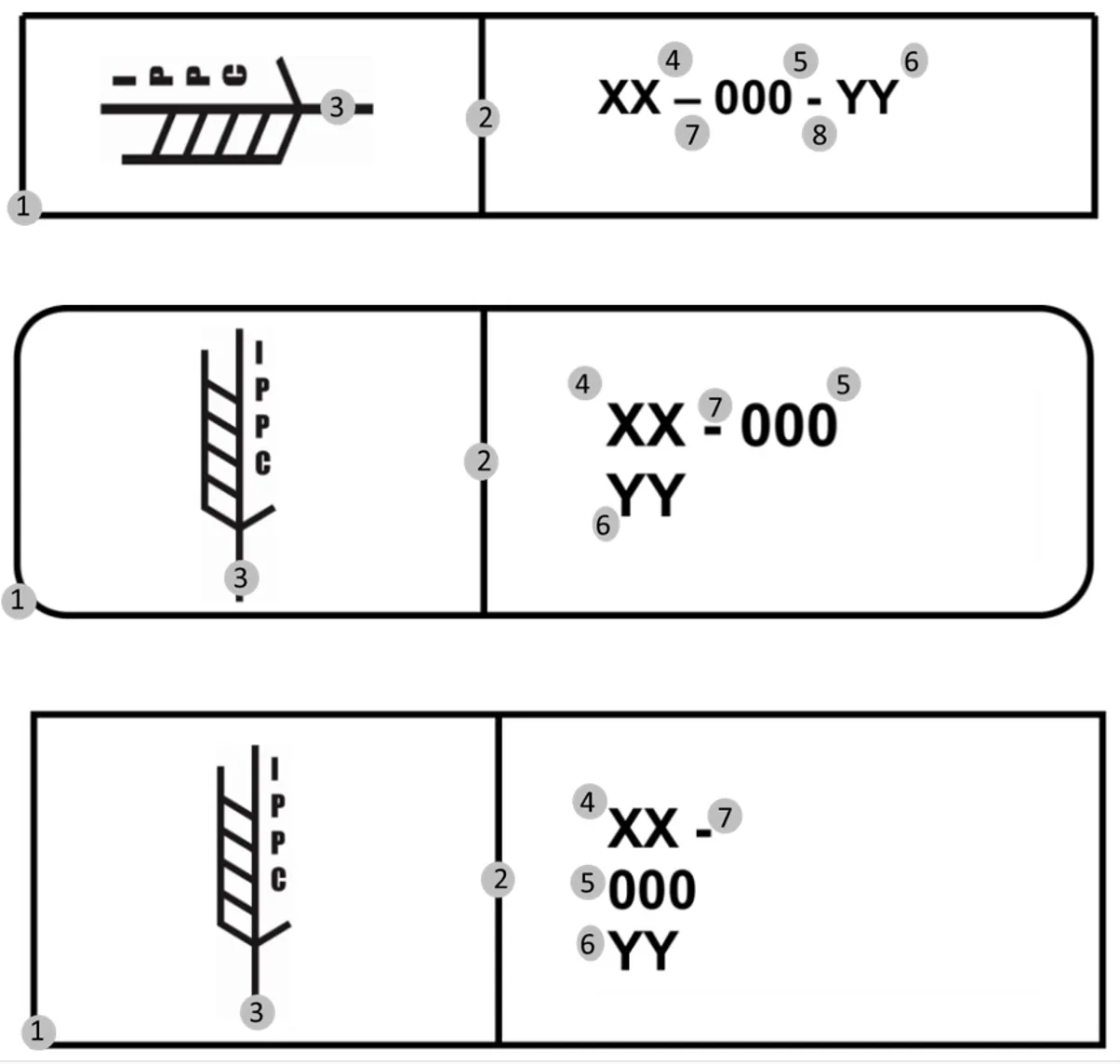
Figure 1 Examples of common layouts of the ISPM 15 mark. Source: ISPM 15.
Key to elements: (1) border, may be rectangular or square, corners may be rounded or square; (2) vertical line separates ISPM 15 symbol from codes; (3) ISPM 15 symbol on left side, either vertical or horizontal; (4) ISO country code; (5) unique code assigned by the National Plant Protection Organisation (NPPO) identifying the WPM producer or treatment provider authorised by the NPPO to apply the mark; (6) IPPC treatment code for the approved measure used (HT, DH, MB, SF); (7) hyphen after country code; (8) hyphen between producer and treatment codes (if presented on same line).
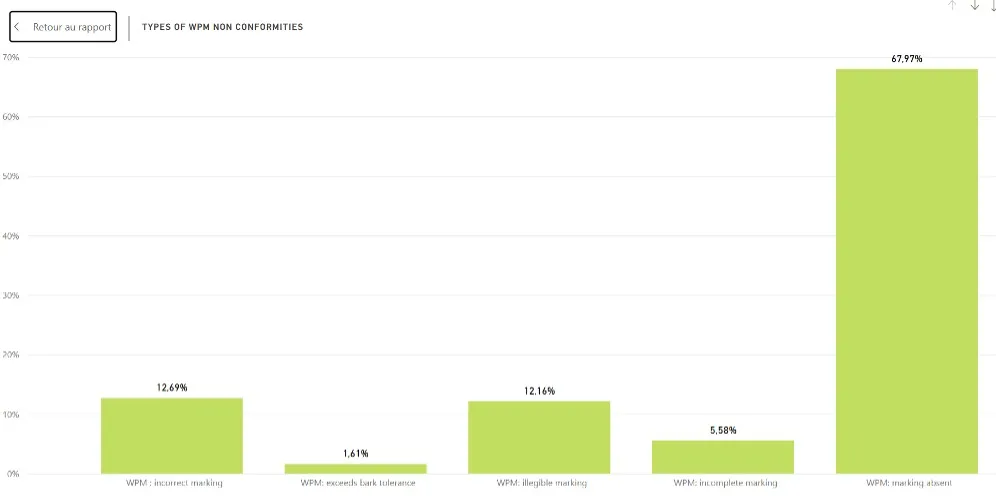
Figure 2 TRACES/EUROPHYT interception data for wood packaging material in 2023 and 2024 (combined):reasons for non-conformities (percentage). Source: TRACES/EUROPHYT via COLEAD Analytics Dashboard.
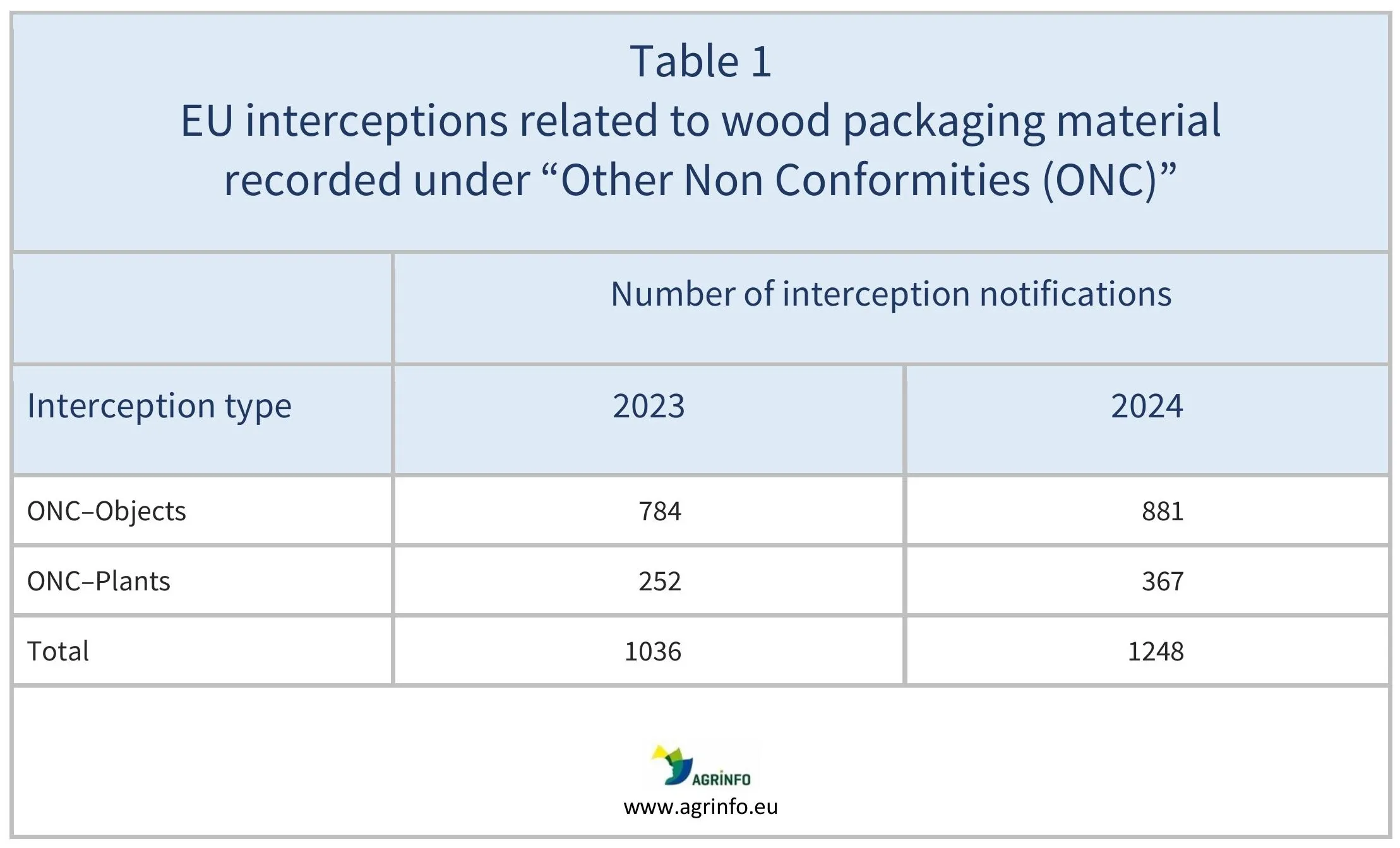
Source: TRACES/EUROPHYT via COLEAD Analytics Dashboard.
Disclaimer: Under no circumstances shall COLEAD be liable for any loss, damage, liability or expense incurred or suffered that is claimed to have resulted from the use of information available on this website or any link to external sites. The use of the website is at the user’s sole risk and responsibility. This information platform was created and maintained with the financial support of the European Union. Its contents do not, however, reflect the views of the European Union.