
EU to set maximum levels for furan and derivatives in baby and infant cereal-based foods
- Contaminants
Summary
Due to concerns that the presence of furan and methylfurans in food could lead to possible long-term liver damage, the European Union (EU) is proposing to set maximum limits for these substances in processed cereal-based food for infants and young children, as well as in baby food.
The EU has notified this proposal to the World Trade Organization Sanitary and Phytosanitary Measures (WTO SPS) Committee (G/SPS/N/EU/933).
EU to set maximum levels for furan, 2-methylfuran, and 3-methylfuran in processed cereal-based foods for infants/young children, and in baby food
Draft Commission Regulation amending Regulation (EU) 2023/915 as regards maximum levels of the sum of furan, 2-methylfuran and 3-methylfuran in processed cereal-based food for infants and young children and in baby food
Draft Annex
Update
Due to concerns that the presence of furan and methylfurans in food could lead to possible long-term liver damage, the European Union (EU) is proposing to set maximum limits for these substances in processed cereal-based food for infants and young children, as well as in baby food.
The EU has notified this proposal to the World Trade Organization Sanitary and Phytosanitary Measures (WTO SPS) Committee (G/SPS/N/EU/933).
Impacted Products
Cereal-based food for infants and young children, baby food
What is changing?
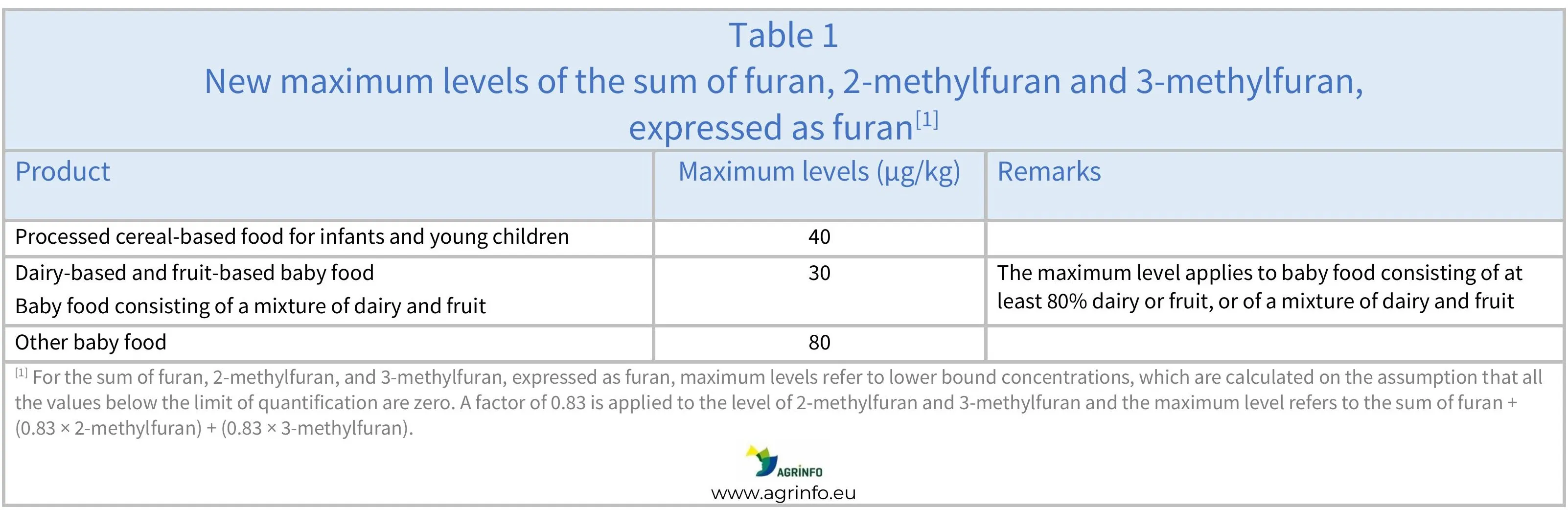
The EU proposes to set maximum levels for the sum of furan, 2-methylfuran, and 3-methylfuran in processed cereal-based food for infants and young children, and baby food.
The proposed limits are set out in Table 1.
Why?
In 2017, the European Food Safety Authority expressed concern that the presence of furan and methylfurans in food could cause long-term liver damage. Babies and young children are particularly at risk due to their exposure to ready-to-eat canned food (EFSA 2017). In 2024, there were several notifications to the Rapid Alert System for Food and Feed (RASFF) on the presence of furan, 2-methylfuran, and 3-methylfuran in baby food, underlining the need for regulatory action.
Timeline
The new maximum limits are expected to apply from 1 January 2028.
What are the major implications for exporting countries?
Exporting countries will need to comply with stricter EU safety standards by ensuring that levels of furan, 2-methylfuran, and 3-methylfuran in infant and baby foods remain within the new limits. This may require adjustments in production processes, quality control systems, and testing capacity.
The new rules could lead to higher compliance costs due to the need for additional laboratory analysis, staff training, and quality assurance systems.
The delayed implementation date provides operators with time to adapt their processes, upgrade standards, and avoid trade disruptions or product rejections.
Recommended Actions
Competent authorities of countries that are members of the WTO can submit comments on the EU’s proposal by emailing the EU SPS Enquiry Point until 26 May 2026.
Exporters are encouraged to use the transitional period to gradually upgrade processes, facilities, and supply chains to ensure compliance without disrupting trade.
Background
Furan can be present in canned and jarred foods as a by-product of the heat treatment (sterilisation) process used to make food safe and shelf-stable.
Resources
Commission Regulation (EU) 2023/915 on maximum levels for certain contaminants in food
EFSA (2017) Scientific Opinion: Risks for public health related to the presence of furan and methylfurans in food. EFSA Journal, 15(10): e05005.
Sources
Draft Commission Regulation as regards maximum levels of the sum of furan, 2-methylfuran and 3-methylfuran in processed cereal-based food for infants and young children and in baby food
Draft Annex
Tables & Figures
Source: Draft Annex
Disclaimer: Under no circumstances shall COLEAD be liable for any loss, damage, liability or expense incurred or suffered that is claimed to have resulted from the use of information available on this website or any link to external sites. The use of the website is at the user’s sole risk and responsibility. This information platform was created and maintained with the financial support of the European Union. Its contents do not, however, reflect the views of the European Union.
EU to set maximum levels for furan, 2-methylfuran, and 3-methylfuran in processed cereal-based foods for infants/young children, and in baby food
Draft Commission Regulation as regards maximum levels of the sum of furan, 2-methylfuran and 3-methylfuran in processed cereal-based food for infants and young children and in baby food
Draft Annex
What is changing and why?
The European Union (EU) plans to introduce new maximum limits for furan, 2-methylfuran, and 3-methylfuran in processed cereal-based foods for infants and young children, and in baby food. The proposed levels are set out in Table 1.
The new rules are driven by concern about the effects of these substances in food, particularly on babies and young children. The European Food Safety Authority has identified that current levels of exposure could cause long-term liver damage.
Actions
Countries that are members of the World Trade Organization can submit comments on the EU proposal by emailing the EU SPS Enquiry Point until 26 May 2026.
Exporters are encouraged to use the transitional period to gradually upgrade processes, facilities, and supply chains to ensure compliance without disrupting trade.
Timeline
The new maximum limits are expected to apply from 1 January 2028.
Tables & Figures
Source: Draft Annex
Disclaimer: Under no circumstances shall COLEAD be liable for any loss, damage, liability or expense incurred or suffered that is claimed to have resulted from the use of information available on this website or any link to external sites. The use of the website is at the user’s sole risk and responsibility. This information platform was created and maintained with the financial support of the European Union. Its contents do not, however, reflect the views of the European Union.