
List of non-EU countries compliant with new EU antimicrobial requirements
- Animal health
- Animal health certification
- Antimicrobial resistance
- Third country lists
- Animal health controls
- Food safety controls
- Official controls
Summary
The EU has published an updated list of non-EU countries that meet new EU requirements on the use of antimicrobial medicinal products in animals or animal products (see Rules on prohibited antimicrobials in imported animal products).
The following countries have been added to the new draft list for antimicrobials: Armenia, Benin, Belize, Burkina Faso, Eswatini, Indonesia, India, Iran, Kenya, Mauritius, Nigeria, Sri Lanka, Serbia, Tanzania, Tunisia, Uganda, Uzbekistan, Wallis and Futuna.
This list of countries is now integrated into Regulation 2021/405 as Annex XVIa. This Annex replaces the previous list in Regulation 2024/2598, which is now repealed.
Only countries that have an approved residue monitoring plan (listed in Regulation 2021/405, Annex -I) can be included in the list for antimicrobials.
The countries listed for residues (Annex -I) but not for antimicrobials (Annex XVIa) are:
- Brazil: beef, horse, poultry, aquaculture, eggs, honey, casing
- Kazakhstan: honey
- Panama: aquaculture
- (United Arab Emirates, which is outside AGRINFO scope).
These countries can be added to the antimicrobials list once they have provided guarantees that they can comply with EU antimicrobial requirements.
EU publishes updated list of non-EU countries that comply with antimicrobial requirements and are authorised to export animals and animal products
Commission Implementing Regulation (EU) 2026/1189 of 4 June 2026 amending Implementing Regulation (EU) 2021/405 as regards the application of the restrictions on the use of certain antimicrobial medicinal products and repealing Implementing Regulation (EU) 2024/2598
Update
The EU has published an updated list of non-EU countries that meet new EU requirements on the use of antimicrobial medicinal products in animals or animal products (see Rules on prohibited antimicrobials in imported animal products).
The following countries have been added to the new draft list for antimicrobials: Armenia, Benin, Belize, Burkina Faso, Eswatini, Indonesia, India, Iran, Kenya, Mauritius, Nigeria, Sri Lanka, Serbia, Tanzania, Tunisia, Uganda, Uzbekistan, Wallis and Futuna.
This list of countries is now integrated into Regulation 2021/405 as Annex XVIa. This Annex replaces the previous list in Regulation 2024/2598, which is now repealed.
Only countries that have an approved residue monitoring plan (listed in Regulation 2021/405, Annex -I) can be included in the list for antimicrobials.
The countries listed for residues (Annex -I) but not for antimicrobials (Annex XVIa) are:
- Brazil: beef, horse, poultry, aquaculture, eggs, honey, casing
- Kazakhstan: honey
- Panama: aquaculture
- (United Arab Emirates, which is outside AGRINFO scope).
These countries can be added to the antimicrobials list once they have provided guarantees that they can comply with EU antimicrobial requirements.
Impacted Products
Animals and animal products for human consumption except for:
- gelatine, collagen, highly refined products, composite products, wild animals, insects, frogs, snails, reptiles
- animals and food in transit not placed on the EU market
- animals or animal products not intended for human consumption
- samples for product analysis and quality testing not placed on the market.
What is changing?
The EU has updated its list of countries that have provided guarantees that animal products exported to the EU comply with the EU’s prohibition of the use in farmed animals of:
- certain antimicrobials reserved to treat humans
- antimicrobials either as growth promoters or to increase yield.
The symbols used in the Annex are explained in Table 1.
For more details see Rules on prohibited antimicrobials in imported animal products.
Only countries that have an approved residue monitoring plan (listed in Regulation 2021/405, Annex -I) can be included in the list for antimicrobials (Regulation 2021/405, Annex XVIa).
Addition of countries
The following countries have been added to the updated list for antimicrobials: Armenia, Benin, Belize, Burkina Faso, Eswatini, Indonesia, India, Iran, Kenya, Mauritius, Nigeria, Sri Lanka, Serbia, Tanzania, Tunisia, Uganda, Uzbekistan, Wallis and Futuna.
Addition of products
The following countries were already listed for antimicrobials, but the products covered have been extended as follows:
- Albania for raw crustaceans (marked Δ, the country can use crustaceans imported from listed countries in products intended for export to the EU)
- North Macedonia for casings
- Thailand for eggs
- Colombia for eggs (marked Δ the country can use eggs imported from listed countries in products intended for export to the EU).
Removal of products
For Ukraine, rabbit has been removed at the country’s own request as it no longer wishes to export these products to the EU.
The countries listed for residues (Regulation 2021/405, Annex -I) but not for antimicrobials (Regulation 2021/405, Annex XVIa) are:
- Brazil: beef, horse, poultry, aquaculture, eggs, honey, casing
- Kazakhstan: honey
- Panama: aquaculture
- (United Arab Emirates, which is outside AGRINFO scope).
As Mozambique is expected to be delisted from Annex -I (see Public health lists of countries that can export animal products to the EU – mid-2026 update), it does not appear in this new list for antimicrobials.
Jamaica does not need to be listed for antimicrobials as it exports only wild molluscs.
For more information on the list of non-EU countries authorised to export animal products, see Lists of non-EU countries for public health and animal health – explained.
Why?
The EU is checking non-EU countries’ rules and systems for managing antimicrobials to support EU and international commitments to combat antimicrobial resistance, identified as a major global public health threat.
Timeline
The antimicrobials list of countries permitted to export animal products to the EU applies from 3 September 2026.
What are the major implications for exporting countries?
Only countries included in the antimicrobials list for the marked commodity or commodities (see Table 1) are authorised to continue exporting these products to the EU from 3 September 2026. The list of countries will be updated as necessary, on the basis of the evidence and guarantees received by the EU.
In addition, from 3 September 2026 onwards, new model certificates must be used including an attestation signed by the competent authority confirming that the food of animal origin was produced from animals that have never been treated with prohibited antimicrobials, and that have not received antimicrobials as growth promoters or to increase yield (see Model health certificates: antimicrobial attestation).
Guarantees provided by exporting countries may be checked in the course of EU health and food audits (see 2026 food audit programme: non-EU countries targeted for controls).
Recommended Actions
Countries that are not currently included in the list of authorised countries for antimicrobials are recommended to take the necessary steps to ensure the animal products they intend to export to the EU have not been administered the relevant antimicrobials (for details see Use of antimicrobials in farmed animals in the food supply chain). When they can provide guarantees, they should submit them to SANTE-VETERINARY-MEDICINES@ec.europa.eu.
A template to submit the guarantees on antimicrobials can be requested from SANTE-VETERINARY-MEDICINES@ec.europa.eu. These guarantees must include every type of animal product exported to the EU to avoid potential disruptions to trade (European Commission 2023). This includes antibiotics that are:
- reserved for human treatments, and
- used as growth promoters or to increase yield.
Non-EU countries that have made a request to be listed regarding residue control plans (Regulation 2021/405, Annex -I) for a certain animal product are recommended to work in parallel on compliance with antimicrobial requirements. Authorisation on both lists is required in order to export to the EU. For an overview of which authorisations are required by commodity, see Lists of non-EU countries for public health and animal health – explained.
Background
Antimicrobial resistance is viewed as a major threat to global health. The EU aims to contain the spread of antimicrobial resistance by introducing concrete measures that ensure the prudent and responsible use of antimicrobials in animals.
Regulation 2023/905 establishes stricter requirements to ensure that live animals and farmed animal products exported to the EU are not produced using prohibited antimicrobials. In order to export, countries have to be included in the official list of authorised exporting countries (confirming they are compliant with the new antimicrobials rules) by 3 September 2026.
Resources
AGRINFO Guidance: Use of antimicrobials in farmed animals in the food supply chain
Online resources from the European Commission:
- Specifications as regards the listing of third countries and the amendments of the official export certificates, Powerpoint, 8 June 2023
- State of play concerning the implementation of Commission Delegated Regulation (EU) 2023/905, Powerpoint, 6 March 2024
- Implementing the EU Regulation on veterinary medicines – scroll down to: “Detailed rules regarding animals or products of animal origin imported into the Union (Article 118(2))”
Regulation 2024/399 as regards model certificates for the entry into the Union of consignments of certain products of animal origin and certain categories of animals
Regulation (EU) 2023/905 as regards the application of the prohibition of use of certain antimicrobial medicinal products in animals or products of animal origin exported from third countries into the Union
Regulation (EU) 2022/1255 designating antimicrobials or groups of antimicrobials reserved for treatment of certain infections in humans
Regulation (EU) 2021/1760 establishing the criteria for the designation of antimicrobials to be reserved for the treatment of certain infections in humans
Commission Implementing Regulation (EU) 2021/405 laying down the lists of third countries or regions thereof authorised for the entry into the Union of certain animals and goods intended for human consumption
Regulation 2019/6 on veterinary medicinal products
Sources
Commission Implementing Regulation (EU) 2026/1189 as regards the application of the restrictions on the use of certain antimicrobial medicinal products
Tables & Figures
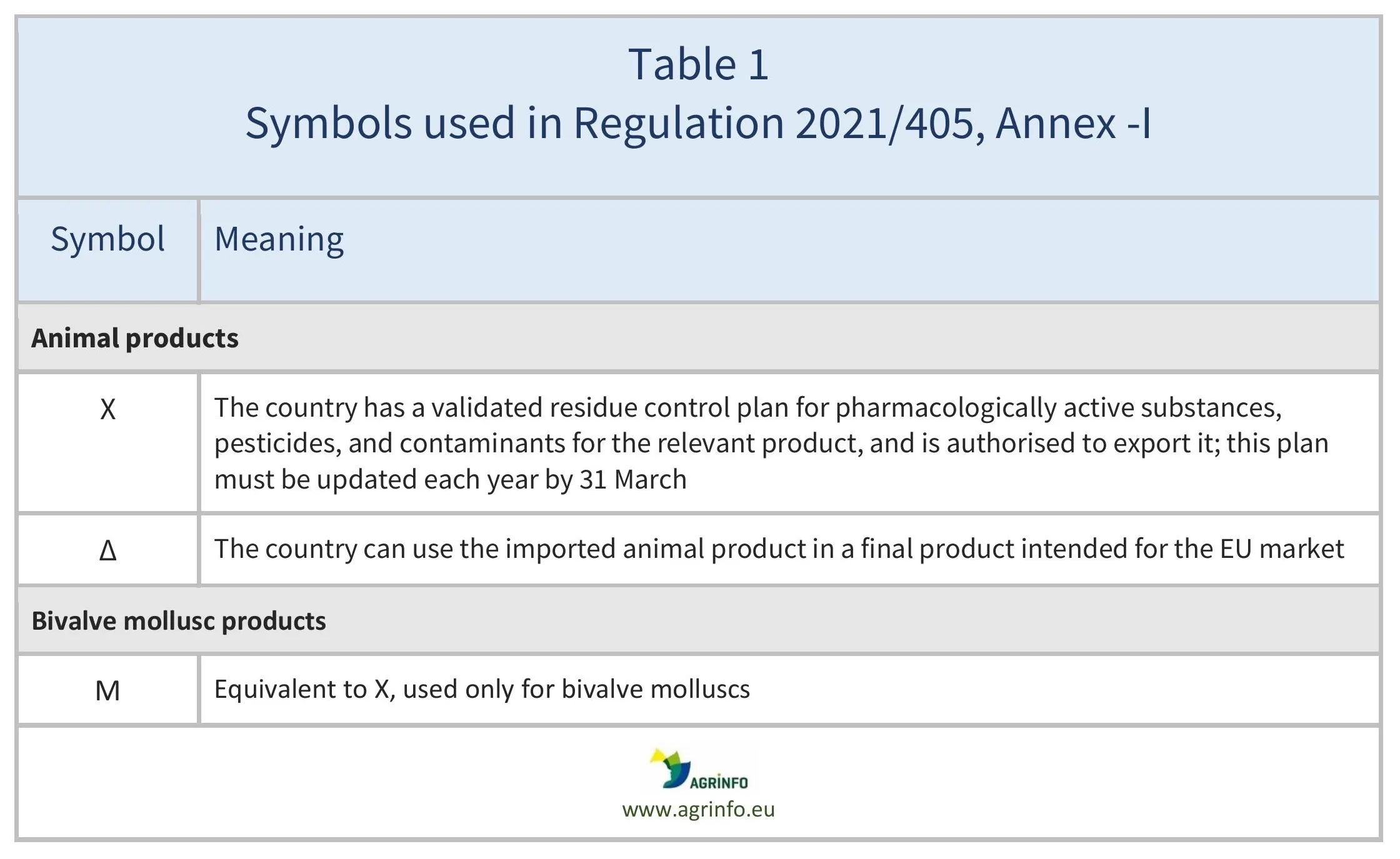
Source: based on Regulation 2021/405, Annex -I
Disclaimer: Under no circumstances shall COLEAD be liable for any loss, damage, liability or expense incurred or suffered that is claimed to have resulted from the use of information available on this website or any link to external sites. The use of the website is at the user’s sole risk and responsibility. This information platform was created and maintained with the financial support of the European Union. Its contents do not, however, reflect the views of the European Union.
EU publishes updated list of non-EU countries that comply with antimicrobial requirements and are authorised to export animals and animal products
Commission Implementing Regulation (EU) 2026/1189 as regards the application of the restrictions on the use of certain antimicrobial medicinal products
What is changing and why?
The EU has updated the list of non-EU countries that meet new EU requirements on the use of antimicrobial medicinal products in animals or animal products (see Rules on prohibited antimicrobials in imported animal products).
The following countries have been added to the updated list for antimicrobials: Armenia, Benin, Belize, Burkina Faso, Eswatini, Indonesia, India, Iran, Kenya, Mauritius, Nigeria, Sri Lanka, Serbia, Tanzania, Tunisia, Uganda, Uzbekistan, Wallis and Futuna.
Only countries that have an approved residue monitoring plan (listed in Regulation 2021/405, Annex -I) can be included in the list for antimicrobials (Regulation 2021/405, Annex XVIa).
The following countries were already listed for antimicrobials, but the products covered have been extended as follows:
- Albania for raw crustaceans (marked Δ, the country can use crustaceans imported from listed countries in products intended for export to the EU; see Table 1)
- North Macedonia for casings
- Thailand for eggs
- Colombia for eggs (marked Δ, the country can use eggs imported from listed countries in products intended for export to the EU).
For Ukraine, rabbit has been removed from the list at the country’s own request as it no longer wishes to export these products to the EU.
The updated list for antimicrobials now includes all the countries that are listed regarding residue control plans (in Regulation 2021/405, Annex -I) except:
- Brazil: beef, horse, poultry, aquaculture, eggs, honey, casing
- Kazakhstan: honey
- Panama: aquaculture
- (United Arab Emirates, which is outside AGRINFO scope).
These countries can be added to the list once they have provided guarantees that they can comply with EU antimicrobial requirements.
Actions
Countries that are not currently included in the list of authorised countries for antimicrobials are recommended to take the necessary steps to ensure that the animal products they intend to export to the EU have not been administered the relevant antimicrobials (for details see Use of antimicrobials in farmed animals in the food supply chain). When they can provide guarantees, they should submit them to SANTE-VETERINARY-MEDICINES@ec.europa.eu.
A template to submit the guarantees on antimicrobials can be requested from SANTE-VETERINARY-MEDICINES@ec.europa.eu. These guarantees must include every type of animal product exported to the EU to avoid potential disruptions to trade (European Commission 2023). This includes banned antibiotics that are:
- reserved for human treatments, and
- used as growth promoters or to increase yield.
Non-EU countries that have made a request to be listed regarding residue control plans (Regulation 2021/405, Annex -I) for a certain animal product are recommended to work in parallel on compliance with antimicrobial requirements. Authorisation on both lists is required in order to export to the EU. For an overview of which authorisations are required by commodity, see Lists of non-EU countries for public health and animal health – explained.
Timeline
The antimicrobials list of countries permitted to export animal products to the EU applies from 3 September 2026.
Tables & Figures
Source: based on Regulation 2021/405, Annex -I
Disclaimer: Under no circumstances shall COLEAD be liable for any loss, damage, liability or expense incurred or suffered that is claimed to have resulted from the use of information available on this website or any link to external sites. The use of the website is at the user’s sole risk and responsibility. This information platform was created and maintained with the financial support of the European Union. Its contents do not, however, reflect the views of the European Union.