
Novel food: Rhamnogalacturonan-I enriched carrot extract (cRG-I)
- Food safety
- Novel/traditional foods
Summary
The European Union (EU) has authorised the use of rhamnogalacturonan-I enriched carrot extract (cRG-I) as a novel food under specified conditions of use, in several categories including food supplements, foods for special medical purposes, diet foods, and processed cereals, among others.
EU authorises rhamnogalacturonan-I enriched carrot extract (cRG-I) as a novel food
Commission Implementing Regulation (EU) 2026/1306 of 11 June 2026 authorising the placing on the market of rhamnogalacturonan-I enriched carrot extract (cRG-I) as a novel food and amending Implementing Regulation (EU) 2017/2470
Update
The European Union (EU) has authorised the use of rhamnogalacturonan-I enriched carrot extract (cRG-I) as a novel food under specified conditions of use, in several categories including food supplements, foods for special medical purposes, diet foods, and processed cereals, among others.
Impacted Products
Food supplements, foods for special medical purposes, total diet replacement for weight control, meal replacement for weight control, processed cereal-based food and baby food for infants and young children, muesli and similar mixed breakfast cereals, cereal bars, fruit-based drinks, biscuits, rusks and cookies, soups and soup concentrates, flavoured milk-based drinks, yogurt-based drinks, milk analogues, cream analogues, cheese analogues, yogurt analogues.
What is changing?
The European Union (EU) has authorised the use of rhamnogalacturonan-I enriched carrot extract (cRG-I) as a novel food.
The authorisation applies to several food categories, including:
- food supplements for the general population above 3 years old: maximum 1,500 mg per day
- total diet replacement for weight control: maximum 1,500 mg per day
- meal replacement for weight control: maximum 500 mg per meal
- certain cereals, cereal bars, biscuits, soups, milk-based drinks, yogurt drinks, dairy analogues, and baby foods, with specific maximum levels set for each category.
See Table 1 for more details.
The EU requires this novel food to be labelled as “Rhamnogalacturonan-I carrot extract”. Food supplements containing it must indicate that they should not be consumed by children under 3 years of age.
Only the company that applied for authorisation, NutriLeads B.V., is authorised to put products containing cRG-I on the EU market over the next 5 years, unless it grants permission or another applicant obtains a separate authorisation based on independent data.
Why?
The European Food Safety Authority has concluded that cRG-I is safe under the proposed conditions of use (EFSA 2025).However, the European Commission changed the proposed name from “carrot fibre” to “carrot extract” because EFSA did not assess whether the material meets the legal definition of dietary fibre under Regulation 1169/2011. The term “fibre” is avoided because it could be misleading to consumers.
Timeline
This novel food may be placed on the EU market from 2 July 2026.
Background
This Regulation updates the Annex to Regulation 2017/2470 which lists authorised novel foods (see the Union list of novel foods). For further information on the EU novel foods authorisation process, see Novel foods explained.
Resources
EFSA (2025) Safety of rhamnogalacturonan-I enriched carrot fibre (cRG-I) as a novel food pursuant to Regulation (EU) 2015/2283. EFSA Journal, 23(7): e9537.
Directive 2002/46/EC on the approximation of the laws of the Member States relating to food supplements.
Council Directive 2001/112/EC relating to fruit juices and certain similar products intended for human consumption.
Sources
Regulation (EU) 2026/1306 authorising the placing on the market of rhamnogalacturonan-I enriched carrot extract (cRG-I) as a novel food
Tables & Figures
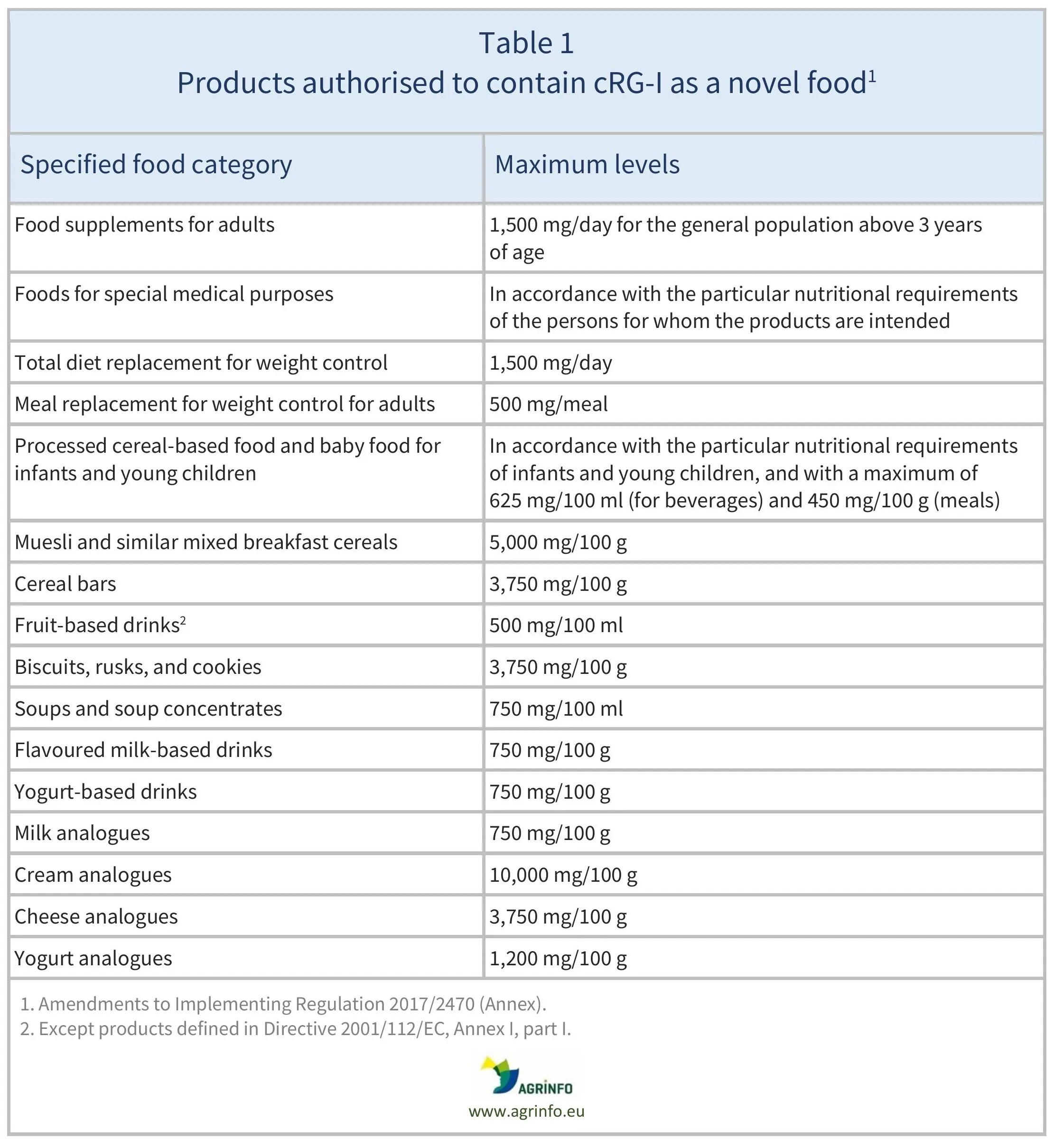
Source: Regulation (EU) 2026/1306
Disclaimer: Under no circumstances shall COLEAD be liable for any loss, damage, liability or expense incurred or suffered that is claimed to have resulted from the use of information available on this website or any link to external sites. The use of the website is at the user’s sole risk and responsibility. This information platform was created and maintained with the financial support of the European Union. Its contents do not, however, reflect the views of the European Union.
EU authorises rhamnogalacturonan-I enriched carrot extract (cRG-I) as a novel food
Regulation (EU) 2026/1306 authorising the placing on the market of rhamnogalacturonan-I enriched carrot extract (cRG-I) as a novel food
What is changing and why?
The European Union (EU) has authorised the use of rhamnogalacturonan-I enriched carrot extract (cRG-I) as a novel food, based on the conclusion by the European Food Safety Authority that it is safe for consumers under the proposed conditions of use.
The authorisation applies to several food categories, including:
- food supplements for the general population above 3 years old: maximum 1,500 mg per day
- total diet replacement for weight control: maximum 1,500 mg per day
- meal replacement for weight control: maximum 500 mg per meal
- certain cereals, cereal bars, biscuits, soups, milk-based drinks, yogurt drinks, dairy analogues, and baby foods, with specific maximum levels set for each category.
See Table 1 for more details.
The EU requires this novel food to be labelled as “Rhamnogalacturonan-I carrot extract”, and labels must indicate that it should not be consumed by children under 3 years of age.
Only the company that applied for authorisation, NutriLeads B.V., is authorised to put products containing cRG-I on the EU market over the next 5 years.
Timeline
This novel food may be placed on the EU market from 2 July 2026.
Tables & Figures
Source: Regulation (EU) 2026/1306
Disclaimer: Under no circumstances shall COLEAD be liable for any loss, damage, liability or expense incurred or suffered that is claimed to have resulted from the use of information available on this website or any link to external sites. The use of the website is at the user’s sole risk and responsibility. This information platform was created and maintained with the financial support of the European Union. Its contents do not, however, reflect the views of the European Union.