
Processing aids for yeast fermentation in reduced-sugar fruit juices
- Food safety
Summary
The European Commission has published a proposal to authorise sodium citrate, diammonium phosphate, yeast autolysate, and thiamine hydrochloride as processing aids in yeast fermentation used to produce reduced-sugar fruit juices, and to set maximum quantities for these substances.
EU proposes to amend rules on processing aids for yeast fermentation in reduced-sugar fruit juices
Draft Commission Delegated Regulation amending Council Directive 2001/112/EC as regards processing aids for yeast fermentation [download]
Update
The European Commission has published a proposal to authorise sodium citrate, diammonium phosphate, yeast autolysate, and thiamine hydrochloride as processing aids in yeast fermentation used to produce reduced-sugar fruit juices, and to set maximum quantities for these substances.
Impacted Products
Reduced-sugar fruit juices
What is changing?
The European Union (EU) proposes to authorise specific processing aids for the production of reduced-sugar fruit juices and similar products using yeast fermentation, amending Directive 2001/112/EC.
Reduced-sugar fruit juice may be produced using authorised sugar-reduction processes, including:
- membrane filtration
- yeast fermentation.
When yeast fermentation is used, processing aids may improve the fermentation process and the quality of the final reduced-sugar juice, reducing their naturally occurring sugar content by at least 30% while maintaining the essential characteristics of the original fruit juice. These aids are used for:
- yeast rehydration, to activate dry yeast before fermentation
- yeast nutrition, to help yeast ferment sugars effectively.
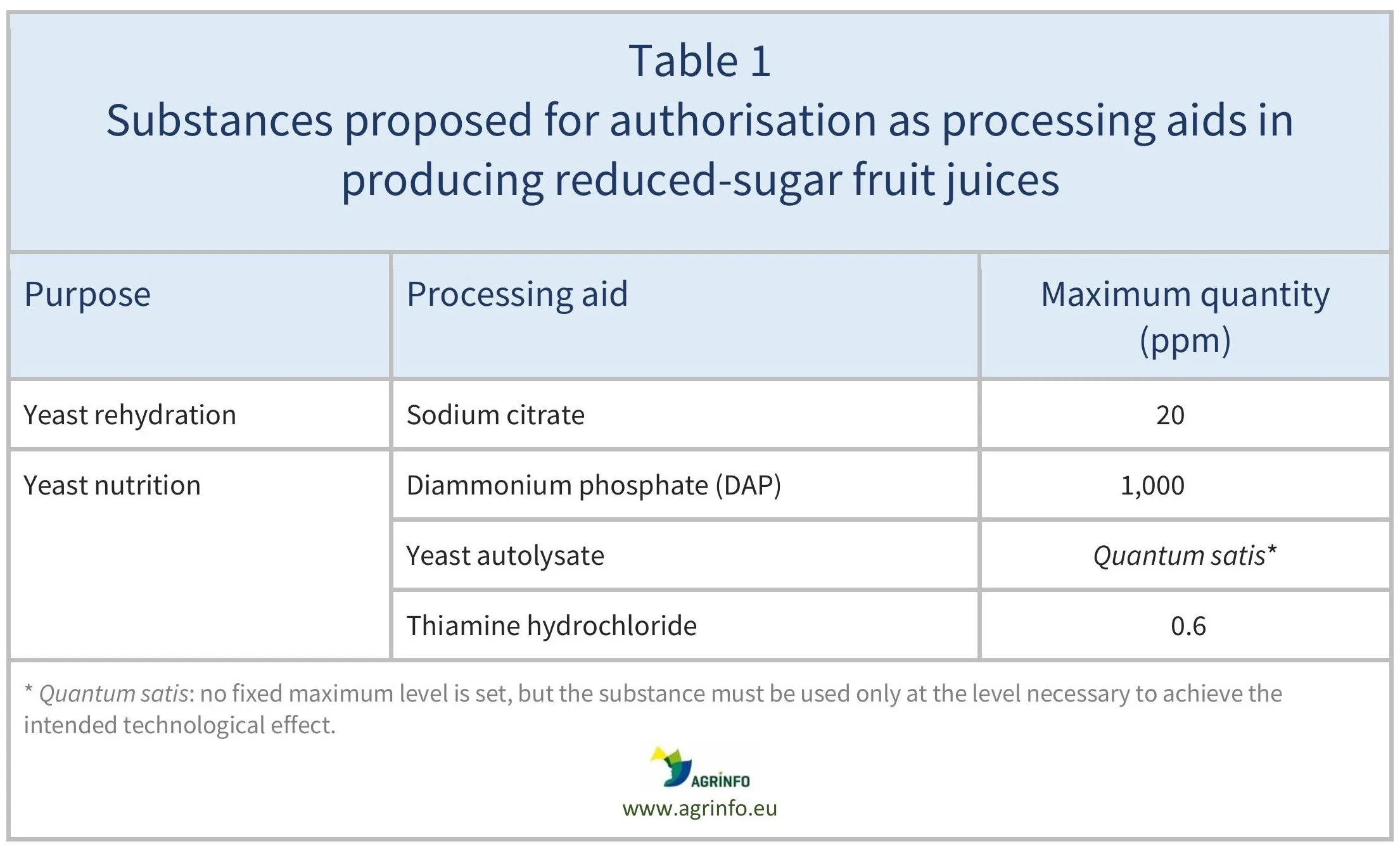
Table 1 lists the substances and maximum quantities that will be authorised for use in producing reduced-sugar fruit juices, which will be added to Directive 2001/112/EC (Annex I, Part II, point 3).
Why?
The proposal gives manufactures and consumers legal clarity on what processing aids may be used to produce reduced-sugar fruit juices. The processing aids sodium citrate, diammonium phosphate, yeast autolysate, and thiamine hydrochloride will be authorised for use in the yeast fermentation process.
Timeline
The Regulation is expected to be published in the third quarter of 2026, and will apply 20 days after its publication.
Recommended Actions
Feedback via the European Commission’s Have your say platform closed on 26 May 2026; feedback to the World Trade Organization (G/TBT/N/EU/1210) closed on 20 July 2026.
Background
Directive 2001/112/EC lays down EU rules for fruit juices and similar products intended for human consumption, including definitions, authorised ingredients, treatments, and substances. It was amended by Directive 2024/1438, which updated several “breakfast directives” covering honey, fruit juices, jams, and dehydrated milk products. For fruit juices, this amendment introduced new categories of reduced-sugar fruit juices and established the authorised processes for reducing naturally occurring sugars, namely membrane filtration and yeast fermentation.
This new Regulation further clarifies the processing aids that may be used when reduced-sugar fruit juices are produced through yeast fermentation.
Resources
Council Directive 2001/112/EC relating to fruit juices and certain similar products intended for human consumption
Directive (EU) 2024/1438 amending Council Directives 2001/110/EC relating to honey, 2001/112/EC relating to fruit juices and certain similar products intended for human consumption, 2001/113/EC relating to fruit jams, jellies and marmalades and sweetened chestnut purée intended for human consumption, and 2001/114/EC relating to certain partly or wholly dehydrated preserved milk for human consumption
Sources
Draft Commission Delegated Regulation amending Council Directive 2001/112/EC as regards processing aids for yeast fermentation [download]
Tables & Figures
Source: based on Draft Regulation
Disclaimer: Under no circumstances shall COLEAD be liable for any loss, damage, liability or expense incurred or suffered that is claimed to have resulted from the use of information available on this website or any link to external sites. The use of the website is at the user’s sole risk and responsibility. This information platform was created and maintained with the financial support of the European Union. Its contents do not, however, reflect the views of the European Union.
EU proposes to amend rules on processing aids for yeast fermentation in reduced-sugar fruit juices
Draft Commission Delegated Regulation amending Council Directive 2001/112/EC as regards processing aids for yeast fermentation [download]
What is changing and why?
The European Union (EU) intends to authorise the processing aids sodium citrate, diammonium phosphate, yeast autolysate, and thiamine hydrochloride for the production of reduced-sugar fruit juices. Processing aids can improve the fermentation process and the quality of the final reduced-sugar juice, reducing their naturally occurring sugar content by at least 30% while maintaining the essential characteristics of the original fruit juice.
Table 1 lists the substances and maximum quantities that will be authorised for use in producing reduced-sugar fruit juices.
Actions
Feedback via the European Commission’s Have your say platform closed on 26 May 2026; feedback to the World Trade Organization (G/TBT/N/EU/1210) closed on 20 July 2026.
Timeline
The Regulation is expected to be published in the third quarter of 2026, and will apply 20 days after its publication.
Tables & Figures
Source: based on Draft Regulation
Disclaimer: Under no circumstances shall COLEAD be liable for any loss, damage, liability or expense incurred or suffered that is claimed to have resulted from the use of information available on this website or any link to external sites. The use of the website is at the user’s sole risk and responsibility. This information platform was created and maintained with the financial support of the European Union. Its contents do not, however, reflect the views of the European Union.